


Four Fundamental Elements of Pickleball Technique
Pickleball may look simple at first glance, but strong fundamentals are what separate consistent players from beginners. Whether you are new to the sport or looking to refine your skills, mastering the core movement principles will significantly improve your performance on the court. Below are the four fundamental elements of pickleball technique, explained in detail to help you build a solid foundation.
1. Ready Position
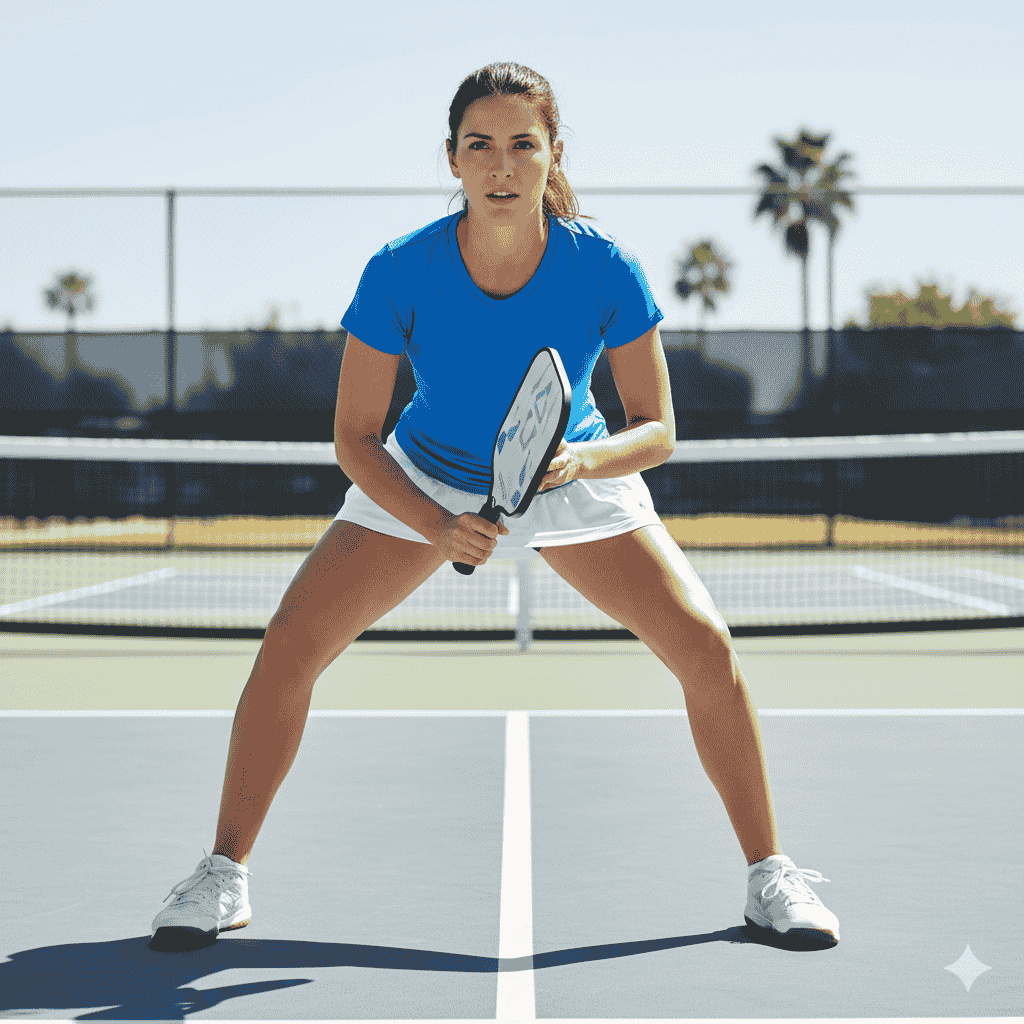
The ready position is the starting point for every successful pickleball shot. It prepares your body to react quickly and efficiently to whatever comes next.
Stand with your feet about shoulder-width apart and keep your knees slightly bent. Your weight should rest on the balls of your feet rather than your heels, allowing for faster movement in any direction. Hold your paddle in front of your body with the paddle head slightly raised and your elbows relaxed.
A proper ready position improves reaction time, balance, and overall court awareness. When you begin every rally in this stance, you give yourself the best chance to respond confidently to both fast and soft shots.
2. Footwork and Balance
Good footwork is the foundation of controlled and accurate shots in pickleball. Instead of reaching with your arm, your feet should move first to position your body correctly.
Use small, quick steps to adjust your position, and avoid crossing your feet whenever possible. Keep your center of gravity low to maintain balance as you move forward, backward, or laterally across the court. Proper footwork allows you to arrive at the ball early and stay stable during your swing.
Strong balance leads to better shot selection, improved consistency, and fewer unforced errors.
3. Paddle Control and Contact Point
Paddle control plays a critical role in shot accuracy and consistency. A relaxed grip allows your arm and wrist to move naturally and absorb the ball’s impact.
Avoid gripping the paddle too tightly, as excessive tension can reduce control and touch. The ideal contact point occurs in front of your body, at a comfortable distance where you can swing freely. Striking the ball too close or too late often leads to mishits and loss of control.
Maintaining a clean contact point improves shot direction, spin, and overall confidence in your strokes.
4. Follow-Through and Recovery
Every shot in pickleball should finish with a smooth and controlled follow-through. After making contact with the ball, allow the paddle to continue naturally in the direction of your target.
A complete follow-through helps stabilize your swing and improves shot consistency. Once the shot is finished, quickly return to the ready position. Fast recovery is essential in pickleball, where rallies can change pace rapidly and require quick reactions.
By finishing each shot properly and resetting your position, you stay prepared for the next exchange.
Final Thoughts
Mastering these four fundamental elements—ready position, footwork and balance, paddle control and contact point, and follow-through and recovery—creates a strong technical foundation for any pickleball player. Consistently applying these principles will lead to better movement, cleaner shots, and greater confidence on the court.
No matter your skill level, focusing on fundamentals is the fastest path to long-term improvement in pickleball.
BHI Pickleball-Custom Pickleball Paddles


