


Pickleball Wall Practice Techniques
Pickleball Wall Drills: Discover the Power of Solo Training
In the fast-growing world of pickleball, wall practice stands out as one of the most effective and accessible training methods. You don’t need a full court or a hitting partner—just a sturdy wall and a ball can help you sharpen technique, consistency, and control. Let’s dive into the essential pickleball wall-hitting techniques and unlock the true potential of solo practice.
Ready Position: The Foundation of Stability and Speed
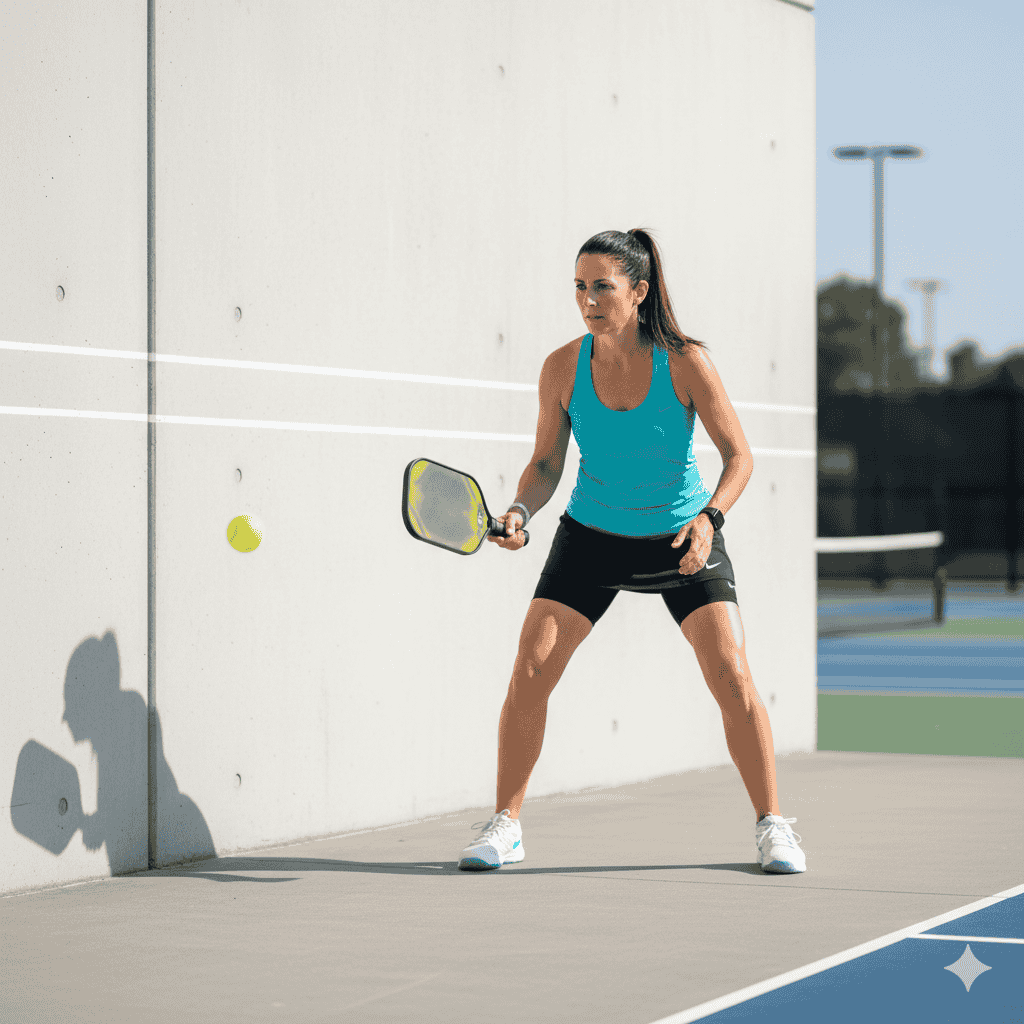
Stand about 3–4 meters (10–13 feet) from the wall with your feet shoulder-width apart. Keep your knees slightly bent and your weight leaning forward on the balls of your feet. This athletic stance allows quick reactions and smooth movement in every direction. Stay relaxed yet alert—like a coiled spring—ready to transfer energy efficiently into every shot.
Paddle Grip: Precision Starts in Your Hand
A comfortable and correct grip is essential for consistent wall practice. Hold the paddle with your dominant hand using a relaxed, neutral grip. Your fingers should wrap naturally around the handle—firm enough for control, but loose enough to stay flexible. Keep the paddle face slightly open at about a 45-degree angle to the ground. This angle helps control ball rebound, height, and direction, making each shot more predictable and repeatable.
Rhythm and Timing: Finding Your Flow
Wall hitting is all about rhythm. Start with gentle, controlled shots and let the ball rebound naturally. Adjust your swing timing and paddle angle based on the ball’s speed and bounce height. Aim for a steady tempo rather than power. Keep your eyes locked on the ball, anticipate its return, and make contact slightly in front of your body around waist height. Consistent rhythm builds muscle memory and improves real-game reactions.
Power and Angle Control: Shaping Every Shot
Mastering power and angle control is the heart of wall training. To send the ball higher, open the paddle face slightly and swing upward. For faster, flatter shots, keep the paddle more vertical and increase swing speed while pushing forward. Through repetition, you’ll learn how subtle adjustments influence ball trajectory, allowing you to shape shots with confidence and accuracy—like an artist refining every stroke.
Footwork: Staying Light and Balanced
Effective wall practice isn’t just about your hands—your feet matter just as much. As the ball rebounds at different angles, use quick, small steps to stay in position. Side steps, shuffle movements, and crossover steps help you maintain balance while conserving energy. Smooth footwork keeps your body aligned and ready, ensuring cleaner contact and better control on every hit.
The Solo Practice Advantage
Practicing pickleball against a wall is more than a drill—it’s a focused journey of self-improvement. With consistent practice and attention to technique, wall training builds control, timing, and confidence faster than you might expect. Whether it’s a quiet morning or a relaxed evening, grab your paddle, face the wall, and let every shot bring you closer to your best game.
BHIPickleball


