


The Hidden Challenges of Pickleball
Beyond Simplicity: Understanding the Real Difficulty of Pickleball
At first glance, pickleball appears to be an easy-to-learn, friendly sport that welcomes players of all ages. Its compact court, lightweight paddle, and slower ball speed often give newcomers the impression that it requires little effort to master. However, once players step onto the court and engage in real competition, they quickly discover that pickleball is far more complex than it seems. Beneath its accessible surface lies a series of challenges that test technique, strategy, physical fitness, and mental awareness.
One of the earliest obstacles players face is the serve. Pickleball serving rules are uniquely strict: the ball must be struck below the waist, with an upward motion, and land diagonally within the correct service box. This demands a high level of control rather than raw power. Beginners often struggle to balance consistency and precision—hitting too hard can result in faults, while serving too softly gives opponents an immediate advantage. Developing a reliable serve takes patience, muscle memory, and countless repetitions before it becomes a true weapon rather than a liability.
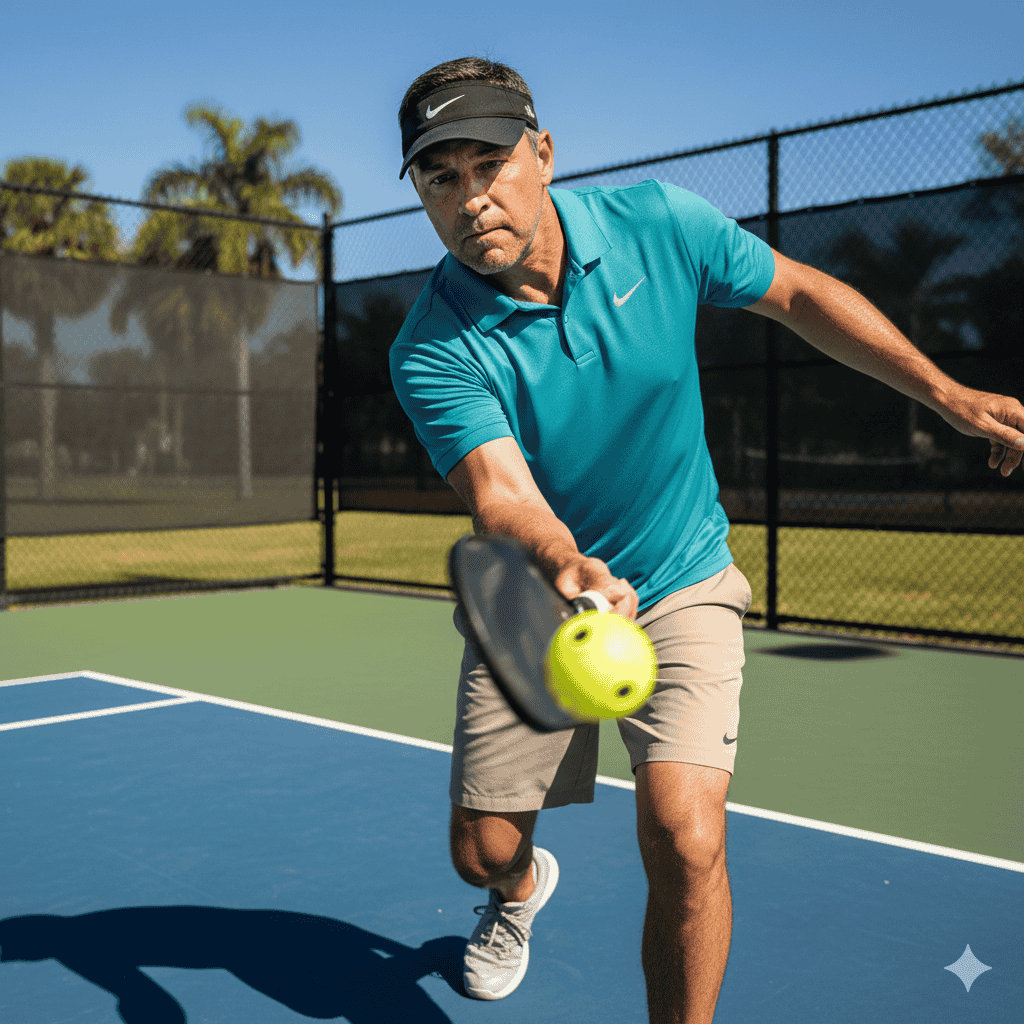
Ball control and shot judgment present another major challenge. The pickleball reacts differently depending on spin, paddle angle, and court surface. Players must quickly read the ball’s trajectory, anticipate its bounce, and adjust their footwork in real time. This process requires sharp reflexes and strong spatial awareness. Skilled players seem almost effortless as they position themselves perfectly before the ball arrives, but behind that ease lies extensive experience built through trial, error, and constant adjustment.
Strategy is where pickleball truly separates casual play from competitive mastery. Success is not determined solely by how hard you hit the ball, but by how smartly you place it. Knowing when to slow the game down, when to apply pressure, and how to exploit an opponent’s weaknesses is critical. In doubles play especially, teamwork and communication are essential. Players must move as a unit, cover the court efficiently, and trust their partner’s positioning. A lack of coordination can quickly turn a strong team into a vulnerable one.
Physical endurance is another often underestimated factor. Despite its smaller court, pickleball involves frequent lateral movement, rapid direction changes, and repeated swings. Long rallies and multi-game matches can drain stamina quickly. Without proper conditioning, fatigue leads to slower reactions, poor shot selection, and unforced errors. Maintaining peak performance requires not only technical training but also consistent work on strength, agility, and cardiovascular fitness.
Ultimately, the true appeal of pickleball lies in these very challenges. Each difficulty presents an opportunity to grow, improve, and push personal limits. By embracing the learning curve and committing to steady practice, players can unlock deeper enjoyment and a stronger sense of achievement. Pickleball is more than a recreational pastime—it is a sport that rewards dedication, strategy, and perseverance. Step onto the court, face the challenges head-on, and discover the deeper satisfaction that comes with mastering the game.
BHI Pickleball-Custom Pickleball Paddles


